Back

College of Respiratory
Therapists of Ontario


INTERPRETATION OF AUTHORIZED ACTS

Professional Practice Guideline


June 2023

 PROFESSIONAL PRACTICE GUIDELINE

College of Respiratory Therapists of Ontario (CRTO) publications contain practice parameters and standards that should be considered by all Ontario Respiratory Therapists in the care of their patients/clients and in the practice of the profession. CRTO publications are developed in consultation with professional practice leaders and describe current professional expectations. It is important to note that these CRTO publications may be used by the CRTO or other bodies in determining whether appropriate standards of practice and professional responsibilities have been maintained.


Resources and references are hyperlinked for convenience and referenced to encourage exploration of information related to individual areas of practice and/or interests. Bolded terms are defined in the Glossary.


The CRTO will update and revise this document every five years, or earlier, if necessary. It is important to note if an employer’s policies are more restrictive than the CRTO’s expectations, the RT must abide by the employer’s policies. Where an employer’s policies are more permissive than the expectations of the CRTO, the RT must adhere to the expectations of the CRTO.

QUESTIONS OR FEEDBACK?

    This Professional Practice Guideline will be updated as new evidence emerges or as practice evolves. Comments on this guideline are welcome and should be addressed to:
    College of Respiratory Therapists of Ontario, 90 Adelaide Street West, Suite 300, Toronto, Ontario M5H 3V9
    Phone 416-591-7800 | Toll Free 1-800-261-0528 | Fax 416-591-7890 | E-mail questions@crto.on.ca
    INTRODUCTION

    Scope of Practice of Respiratory Therapists

    The scope of practice outlined in the Respiratory Therapy Act (RTA) states:

    The practice of respiratory therapy is the providing of oxygen therapy, cardio-respiratory equipment monitoring and the assessment and treatment of cardio-respiratory and associated disorders to maintain or restore ventilation (RTA. s.3)

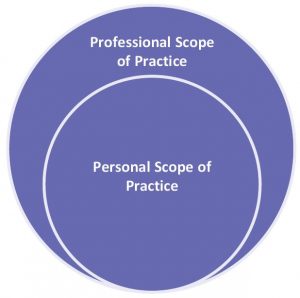
    While the professional scope of practice, as defined by the RTA, is broad, each RT has their own personal scope of practice that is influenced by factors such as their role within their specific practice setting. It is important to remember that having the authority to perform a controlled act does not mean it is appropriate to do so. The CRTO’s Standards of Practice states that a Respiratory Therapist must practice within both the professional scope of practice and their personal scope of practice (Standard 4 – Competence/Ongoing Competence).

    It is also important to note that not all tasks that might fall under a particular authorized act are within the scope of practice of Respiratory Therapy.

    Example

    “Administering a substance by injection or inhalation” is a controlled act authorized to RTs. This enables RTs to administer medications by injection that are within the RT scope of practice (e.g., flu vaccines, procedural sedation, etc.). However, medications such as forms of botulinum toxins (i.e., Botox) are outside of the RT scope of practice. Therefore, to administer those types of substances, a formal delegation and educational process is required.

    Controlled Acts, Public Domain & Authorized Acts

    Controlled Acts

    The Regulated Health Professions Act, 1991 (RHPA) identifies 14 controlled acts that pose significant risk of harm to the public of Ontario [RHPA section 27(2)]. These acts may only be performed by the regulated health care professionals who are authorized by their profession-specific Acts (e.g., Respiratory Therapy Act (RTA)).

    If that authority has not been granted to an individual via their profession specific legislation, there are two alternative processes by which a controlled act can be performed, which are as follows:

    9

    1. Legislative Exceptions & Exemptions

    The RHPA identifies certain exceptions where an individual may perform controlled acts even if they do not have the necessary authority to do so, and these are outlined in the Exceptions within the RHPA section of this practice guideline. In addition, there are exemptions in other legislation that enables Respiratory Therapists and other healthcare professional to perform other specific tasks. This is outlined in the Exemptions within the Controlled Acts Regulation section of this practice guideline.

    9

    2. Delegation

    Authority to perform a controlled act may be obtained through the process of delegation from a regulated health professional who has the authority to perform the controlled act to another person (regulated or unregulated), who does not have this authority. The controlled acts that are not authorized to Respiratory Therapists but that could be delegated are outlined in the Delegation of Controlled Acts Not Authorized to Respiratory Therapists section of this practice guideline.

    Public Domain

    If a task is not a controlled act, then it is considered to be in the public domain and may be performed by anyone (regardless of whether they are a regulated healthcare professional or not), provided they are competent to do so. Regulated health professionals must adhere to the standards of practice of their respective profession while performing activities that fall within the public domain.

    Examples of Public Domain Tasks

    1. Administering an oral medication
    2. Spirometry (with no bronchodilators)

    Controlled Acts Authorized to Respiratory Therapists

    Controlled Acts Authorized to RTs

    The Respiratory Therapy Act (RTA) is the profession-specific legislation that lists the five controlled acts authorized to Respiratory Therapists (RTs)* in Ontario. These five controlled acts are referred to as the profession’s authorized acts** and are as follows:

    9

    1. Performing a prescribed procedure below the dermis.

    9

    2. Intubation beyond the point in the nasal passages where they normally narrow or beyond the larynx.

    9
    3. Suctioning beyond the point in the nasal passages where they normally narrow or beyond the larynx.
    9

    4. Administering a substance by injection or inhalation.

    9
    5. Administering a prescribed substance by inhalation.

    * In this practice guideline, “Respiratory Therapists (RTs)” refers to CRTO Members who hold an active General Certificates of Registration with no terms, conditions or limitations preventing them from performing any authorized acts. Graduate Respiratory Therapists (GRTs) Practical (Limited) Respiratory Therapists (PRTs) and those in the Emergency Class (RT (ECs), have specific terms, conditions and limitations that are outlined below.

    ** All five authorized acts may be performed on adult, pediatric and neonatal populations.

    PLEASE NOTE:

    Authorized Act #4 enables RTs, RT(Es) PRTs & GRTs to perform all procedures that fall under the controled act Administering a substance by injection or inhalation, provided they have a valid order and subkect to TCLs.

    Authorized Act #5 enables only RTs to administer a substance that is “prescribed” in regulation. In this case, the regulation is the Prescribed Substance Regulation and the substance is oxygen. This authorized act does not have the requirement of an order. Therefore, an RRT can independently administer oxygen, provided they are not prevented from doing so by any other piece of legislation or polices. More information can be found on this act in the Administering a prescribed substance by inhalation section of this practice guideline.

    Authorized Acts #1

    Performing a prescribed procedure below the dermis

    In this first authorized act, “prescribed” means prescribed in regulation. The Prescribed Procedures Regulation lists the specific procedures included under the controlled act of “performing a prescribed procedure below the dermis” and separates them into two categories: basic and advanced. Table 1 outlines what procedures are contained within the regulation and provides some examples of specific procedures. Please note that the list of examples is not exhaustive and is offered simply as a point of clarification.


    Table 1: Prescribed Procedures below the Dermis

    PROCEDUREEXAMPLES
    BASIC
    i. Arterial, venous, and capillary puncture.● Arterial Blood Gas
    ii. Insertion, suturing, aspiration, repositioning, manipulation and removal of an arterial cannula.● Arterial line
    iii. Insertion, suturing, aspiration, repositioning, manipulation, and removal of a venous cannula.● Peripheral IV
    ● Internal Jugular Vein cannulation
    ADVANCED
    i. Manipulation or repositioning of a cannula balloon.● Pulmonary Capillary Wedge Pressure (PCWP)
    ● Intra-Aortic Balloon Pump (IABP)
    ii. Chest needle insertion, aspiration, reposition, and removal.
    iii. Chest tube insertion, aspiration, reposition and removal.
    iv. Bronchoscopic tissue sample for the purpose of bronchoalveolar lavage and endobronchial brushing.*
    v. Intraosseous needle insertion.
    vi. Subcutaneous electrode placement for interoperation and perinatal fetal monitoring.
    * Tissue biopsy is not included as part of this procedure because it requires the sample to be taken below the mucous membrane, which is not authorized to RTs. To perform a tissue biopsy, delegation is required.

    Specific Requirements for Performing Prescribed Procedures below the Dermis

    9

    To perform any procedure classified as Advanced, a Registered Respiratory Therapist (RRT) must have completed a CRTO approved certification/recertification program within the past two years. More information is available in the CRTO’s Certification Programs for Advanced Prescribed Procedures below the Dermis PPG.

    9

    Graduate Respiratory Therapists (GRTs) and Practical Respiratory Therapists (PRTs) must not perform any procedure classified as Advanced, even if they have successfully completed an approved certification program.

    9

    PRTs must not perform any procedure classified as Basis unless they have been granted to do so by the CRTO’s Registration Committee (i.e., have specific terms and conditions applied to their certificate of Registration).

    Table 2: Procedures Below the Dermis & Tracheostomy Tube Changes

    PROCEDURERRTGRT*PRT
    Basic Prescribed Procedures**
    Advanced Prescribed Procedures
    * require general supervision to perform a controlled act and are not permitted to delegate any controlled acts.
    Regional Anesthesia

    The insertion of spinal, epidural blocks and peripheral nerve blocks are not authorized under the current Prescribed Procedures Regulation; therefore, delegation is required. The injection of medication through these routes; however, falls under “administering a substance by injection or inhalation”, which is authorized to RTs.

    Authorized Acts #2

    Intubation beyond the point in the nasal passages where they normally narrow or beyond the larynx

    The second controlled act authorized to RTs is intubation beyond the point in the nasal passages where they normally narrow or beyond the larynx. “Beyond the larynx” is interpreted by the CRTO as at or below the level of the larynx, whether you are referring to the airway or the esophagus, including access by oral, nasal, and artificial
    opening routes.

    Examples of tasks an RT can perform under this authorized act are:

    9

    Endotracheal intubation, including nasal and oral routes, as well as bronchoscopic assisted techniques;

    9

    Laryngeal mask insertion;

    9

    Nasogastric tube insertion and the insertion of specially designed nasogastric tubes with EMG electrodes that cross the diaphragm for the purpose of Neurally Adjusted Ventilatory Assist (NAVA);

    9

    Nasal airway insertion; and

    9

    Feeding tube insertion.

    Authorized Acts #3

    Suctioning beyond the point in the nasal passages where they normally narrow or beyond the larynx

    The third controlled act authorized to RTs is suctioning beyond the point in the nasal passages where they normally narrow or beyond the larynx. Beyond the larynx is interpreted as at or below the level of the larynx, whether you are referring to the airway or the esophagus, including access by oral, nasal, and artificial opening routes.

    An RT may perform suctioning via a number of routes, including nasopharyngeal, tracheal, nasogastric, and bronchoscopic. The RTA does not require an order for this authorized act; however, other pieces of legislation may have an impact on whether or not an order is required (e.g., Public Hospitals Act – Hospital Management Regulation). In addition, an RT must comply with their employer’s policies and procedures regarding suctioning.

    Authorized Acts #4

    Administering a substance by injection or inhalation

    The fourth controlled act authorized to RTs is administering a substance by injection or inhalation.

    9

    1. Under this act, an RT may administer a substance by inhalation in the following forms:

    • Liquids (e.g., surfactant, epinephrine instillation)
    • Powders (e.g., Turbuhaler™, Diskus™)
    • Aerosols (e.g., wet nebulization, bronchodilators, narcotics, antibiotics, bronchoprovocators (e.g., Methacholine))
    • Gases
      • anesthetic (e.g., Nitrous oxide)
      • non-anesthetic (e.g., Oxygen, Heliox, Nitric Oxide, Compressed Air)
      • specialized (e.g., Carbon Monoxide, Helium, Nitrogen)
      • pressurized (e.g., invasive and non-invasive positive pressure ventilation – including CPAP, BiPAP, Hyperbaric Oxygen Therapy)
    • Vapors (e.g., anesthetic agents such as Isoflurane)
    9

    2. Under this act, an RT may administer substances by injection via the following routes:

    • Intravascular (e.g., Intravenous D5W, Normal Saline, Ringers Lactate, blood products)
    • Intramuscular (e.g., Vaccines, Vitamin K, Narcan, Epinephrine)
    • Intradermal (e.g., TB test)
    • Sub-cutaneous (e.g., Xylocaine, Heparin)
    Non-Invasive Positive Pressure Ventilation (NIPPV)

    It is the position of the CRTO that air that has been augmented, whether by changing the concentration of the constituent gases (e.g., adding oxygen) or by adjusting the pressure beyond atmospheric, constitutes “administering a substance by…inhalation”. Therefore, the application of NIPPV is a controlled act and should only be performed by health care professionals who have the statutory authority (4th authorized act in the Respiratory Therapy Act) as well as the requisite education, training and clinical competence.

    PLEASE NOTE:

    Vaccines administered by RTs must only be those recommended in established guidelines (e.g.,ATS, CTS) for the management of cardiorespiratory and associated disorders (e.g., COVID, Influenza, Pneumococcal Pneumonia).

    Authorized Acts #5

    Administering a prescribed substance by inhalation

    The Prescribed Substances Regulation currently lists oxygen as the substance that RTs can administer. RTs have always been able to – and still are able to – administer oxygen on the order of a physician, midwife, dentist or nurse practitioner. The difference with the 5th authorized act is that, similar to suctioning, it does not have the requirement of an order. This means that RTs (and RT(Es), depending on where they work, can independently initiate, titrate or discontinue oxygen-based solely on their own professional judgment. Please note that this authorized act only applies to RTs and RT(Es) require general supervision.

    It is important to understand, however, that there are other pieces of legislation and policies that limit where RTs can independently administer oxygen. The most applicable piece of legislation, in this instance, is the Public Hospitals Act – Hospital Management Regulation, which stipulates that every act performed in a public hospital requires an order and limits who can provide those orders. However, this restriction does not apply to non-public hospital/community practice settings (e.g., Home Care, Family Health Teams, private community-based clinics, etc.).

    In addition, the Home Oxygen Therapy Policy and Administration Manual (October 2019) stipulates that the initiation and discontinuation of oxygen must be ordered by a physician and that any changes to the prescription are the responsibility of the ordering physician.

    For more information, please refer to the Oxygen Therapy CBPG and the Independent Administration of Oxygen FAQ.

    For Example

    An RT working in the community has been asked to provide oxygen to a patient who is self-paying for the therapy. In this situation, the RT may initiate, titrate and/or discontinue therapeutic oxygen based solely on their own professional judgement. The RT must make their own determination on the patient’s oxygen settings and set their own fee structure. As with any situation when charging for clinical services, the RT will need to ensure that:

    1. the therapy is clinically indicated;
    2. they are not in a conflict of interest;
    3. the patient is making a fully informed decision on their course of care; and
    4. they are charging a fair and reasonable rate for their services*.

    * Currently, RTs do not have the ability to bill OHIP for services.

    Hyperbaric Oxygen Therapy (HBOT)

    The 5th authorized act, in combination with the Prescribed Substances Regulation, permits RTs to independently administer therapeutic oxygen. Therefore, in a hyperbaric clinic located outside of a hospital, RTs and RT(E)s can administer oxygen without the additional requirement of an order from a physician or other authorizer. However, this administration of oxygen must occur in accordance with a diagnosis and prescribed treatment plan (e.g., dive depth/pressure, time, etc.) that has been determined by the most responsible physician. RRTs cannot independently initiate hyperbaric therapy.

    In both the hospital and community setting, certification as a Hyperbaric Technologist by the Undersea and Hyperbaric Medical Society (UHMS) sets the industry standard that any RT administering HBOT would be expected to perform to. In the Oxygen Therapy CBPG, the CRTO outlines the list of 14 indications for hyperbaric oxygen therapy that are established by the UHMS. Health Canada supports the application of HBOT that is based on the UHMS guidelines and warns against “off label” uses that have not been scientifically proven to be effective. Therefore, the CRTO does not endorse “off label” use of HBOT and the engagement in such activity by an RT may be considered professional misconduct (Professional Misconduct Regulation (s.7) – Recommending, dispensing or selling medical gases or equipment for an improper purpose). In addition, the CRTO’s Standards of Practice state that RTs must refrain from making a representation about a remedy, treatment, device or procedure for which there is no generally accepted scientific or empirical basis. (Standard 8 – Evidence Informed Practice)

    Considerations when Performing Authorized Acts

    When determining if it is appropriate to perform an authorized act, an RT must first consider the following:

    9

    Is the performance of the authorized act in the best interest of the patient?

    9

    Do they possess the requisite competencies (knowledge, skills & abilities) to perform the authorized act safely?

    9

    Is the performance of this particular task within the Scope of Practice of Respiratory Therapy?

    9

    Does their Certificate of Registration permit them to perform it (i.e., do they hold the appropriate certificate of registration required, and are there any terms, conditions, or limitations on their Certificate of Registration preventing them from performing this task?)

    9

    Is an Authorizing Mechanism (Direct Order or Medical Directive) required to perform this authorized act, and, if so, do they have a valid order (direct order or medical directive) from an authorized prescriber?

    Authority & Authorizing Mechanisms

    As mentioned at the beginning of this practice guideline, other methods of gaining the authority to perform a controlled act are delegation and exceptions that exist within specific pieces of legislation, such as the RHPA and the Controlled Acts Regulation.

    Delegation of Controlled Acts Not Authorized to Respiratory Therapists

    RTs may, in some specific circumstances, receive delegation to perform a controlled act that is not authorized to Respiratory Therapists. This is permitted provided the specific task to be performed falls within the Scope of Practice of Respiratory Therapy. The controlled acts that RTs are permitted to accept delegation are as follows:

    9

    Communicating to the individual or his or her personal representative a
    diagnosis identifying a disease or disorder as the cause of symptoms of
    the individual in circumstances in which it is reasonably foreseeable that
    the individual or his or her personal representative will rely on the
    diagnosis. (RHPAs.27 (2)1)

    9
    Putting an instrument, hand or finger,

    • beyond the external ear canal,
    • beyond the opening of the urethra,
    • beyond the labia majora,
    • beyond the anal verge,
    • into an artificial opening into the body. (RHPA s.27 (2)6)
    9

    Applying or ordering the application of a form of energy prescribed by the regulations under the RHPA.* (RHPA s.27 (2)7), with the exception of diagnostic ultrasound (which no longer requires delegation)

    * The Controlled Acts Regulation (Forms of Energy) outlines the specific tasks that fall under this controlled act.

    9

    Dispensing a drug as defined in the Drug and Pharmacies Regulation Act.* (RHPA s.27 (2)8)
    * RTs are not permitted to receive delegation for the other portions of this controlled act, which are prescribing, selling, or compounding a drug and supervising the part of a pharmacy where such drugs are kept. More information on Dispensing is available in the CRTO’s Administering and Dispensing Medications PPG.

    9

    Allergy challenge testing of a kind in which a positive result of the test is a significant allergic response. (RHPA s.27 (2)13)

    More information on the delegation process is available in the CRTO’s Delegation of Controlled Acts Professional Practice Guideline (PPG).

    Exceptions within the RHPA

    The RHPA contains certain exceptions that enable someone who is not otherwise authorized to perform a controlled act in specific circumstances, provided they have the requisite competence (knowledge, skills, and judgment) to perform the task safely. The exceptions outlined in the RHPA are as follows:

    9

    Rendering first aid or temporary assistance in an emergency; (RHPA s.29 (1)a)

    9

    Fulfilling the requirements to become a member of a health profession and the act is within the scope of practice of the profession and is done under the supervision or direction of a member of the profession; (RHPA s.29 (1)b)

    9

    Treating a person by prayer or spiritual means in accordance with the tenets of the religion of the person giving the treatment; (RHPA s.29 (1)c)

    9

    Treating a member of the person’s household and the act is a controlled act set out in paragraph 1, 5 or 6 of subsection 27 (2) (RHPA s.29 (1)d), which are:

    • Communicating to the individual or his or her personal representative a diagnosis identifying a disease or disorder as the cause of symptoms of the individual in circumstances in which it is reasonably foreseeable that the individual or his or her personal representative will rely on the diagnosis. (RHPA s.27 (2)1)
    • Administering a substance by injection or inhalation. (RHPA s.27 (2)5)
    • Putting an instrument, hand or finger,
      • beyond the external ear canal,
      • beyond the point in the nasal passages where they normally narrow,
      • beyond the larynx,
      • beyond the opening of the urethra,
      • beyond the labia majora,
      • beyond the anal verge, or
      • into an artificial opening into the body. (RHPA s.27 (2)6)
    9

    assisting a person with his or her routine activities of living and the act is a controlled act set out in paragraph 5 or 6 of subsection 27 (2) (RHPA s.29 (1)d), which are:

    • Administering a substance by injection or inhalation. (RHPA s.27 (2)5)
    • Putting an instrument, hand or finger,
        • beyond the external ear canal,
        • beyond the point in the nasal passages where they normally narrow,
        • beyond the larynx,
        • beyond the opening of the urethra,
        • beyond the labia majora,
        • beyond the anal verge, or into an artificial opening into the body. (RHPA s.27 (2)6)

    PLEASE NOTE:

    Student RTs do not require delegation to perform controlled acts. They are permitted to perform controlled acts authorized to Respiratory Therapists via the exception in the RHPA provided:

    1. they are enrolled in a program to become a Respiratory Therapist, and only perform the authorized acts as part of their educational program;
    2. the authorized acts are within the Respiratory Therapy scope of practice; AND
    3. they perform these authorized acts under the supervision or direction of a Member of the profession.


    Exemptions within the Controlled Acts Regulation

    Tracheostomy Tube Changes

    The authority for RTs to perform tracheostomy tube changes for an established stoma and for a fresh stoma is derived from the Controlled Acts Regulation (s.14).

    All Members of the CRTO are permitted under the Controlled Acts Regulation to change a tracheostomy tube, subject to any terms, conditions and limitations on their certificates of registration. However, it is the position of the CRTO that GRTs are not permitted to perform a tracheostomy tube change for a stoma that is less than 24 hours old.


    PLEASE NOTE:

    Because that tracheostomy tube changes are now listed as an exemption in the Controlled Acts regulation, respiratory therapists (RRTs, GRTs, PRTs and RT(E)s) are no longer permitted to delegate tracheostomy tube changes.

    When changing percutaneous tracheostomy tubes, RTs must ensure they are doing so in accordance with their organizational policy with respect to timelines.

    Applying a Form of Energy

    Diagnostic Ultrasound

    Diagnostic ultrasound is classified as an ultrasound that produces an image or other data and is used to visualize structures (e.g., for procedural guidance) and requires frequencies between 2 and 20MHz .

    The Ontario Ministry of Health amended the Controlled Acts Regulation (s. 7.1 (1) – O. Reg. 107/96 ) to enable Respiratory Therapists to utilize diagnostic ultrasound in their practice under the order of a physician or nurse practitioner.  RTs who wish to use diagnostic ultrasound in their practice (e.g., radial arterial line catheterization, lung ultrasound) no longer require delegation only a valid order (direct order or medical directive). Information regarding the delegation process can be found in the CRTO’s Delegation of Controlled Acts PPG. Information regarding orders can be found in the CRTO’s Orders for Medical Care PPG.


    AED

    The “application of a form of energy,” listed as a controlled act in the RHPA, is not authorized to Respiratory Therapists under the Respiratory Therapy Act, 1991. However, one of the procedures under this controlled act can apply to the practice of Respiratory Therapy. That is, the Use of Automated External Defibrillators (AED). RTs may only use AEDs, under specific circumstances and with the requisite knowledge, skill and competency.

    The use of an AED can only be performed if authorized by:

    • An order and delegation, or;
    • Exercise of the emergency exception in the RHPA.


    How to Authorize the Use of an AED

    9

    Order and Delegation

    The preferred authorization mechanism is the combination of an order and delegation. Under this approach, the order serves to authorize the use of the AED (the application of energy) and the delegation transfers that authority to the RT. Ideally, this is done “in the moment” on a case-by-case basis, although this may not be practical in the urgency associated with the management of a cardiac arrest. As such, it is permissible to use a standing medical directive and delegation that would apply in these scenarios (i.e., an organization-wide medical directive and delegation that allows any RT who has been trained in the use of AEDs to apply them in specified situations, such as a cardiac arrest).

    9

    Emergency Exception

    There is an emergency provision in the RHPA that allows for an exception to the restriction on controlled acts. This exception assumes that performance of the controlled act in question is not carried out frequently and that it is truly an emergency. Further, it is important to distinguish between an unforeseen emergency and a “regular” emergency. This distinction is recognized in the Good Samaritan Act, 2001, which provides immunity from negligence lawsuits for health professionals who provide “emergency health care services or first aid assistance” at a place other than a hospital or health care facility, thereby implying that those are unforeseen emergencies, whereas the work they do IN hospital and health care facilities are “regular” emergencies. The combination of an order and delegation would be the most appropriate approach for managing “regular” emergencies, although clearly not all cardiac arrests are foreseeable. Therefore, it is acceptable for an RT to apply an AED under the emergency exception, yet only in circumstances where an order and delegation are not available.

    Authorizing Mechanisms
    (Direct Orders and Medical Directives)

    Of the five controlled acts authorized to RTs via the RTA, three require additional authorizing mechanisms such as direct orders or medical directive.


    Table 4: Authorizing Mechanisms

    Authorized Acts (under the Respiratory Therapy Act)DIRECT ORDER/MEDICAL DIRECTIVE REQUIRED?
    #1. Performing a prescribed procedure below the dermis.Yes
    #2. Intubation beyond the point in the nasal passages where they normally narrow or beyond the larynx.Yes
    #3. Suctioning beyond the point in the nasal passages where they normally narrow or beyond the larynx.No
    #4. Administering a substance by injection or inhalation.Yes
    #5. Administering a prescribed substance by inhalation.No
    Exceptions (under the Controlled Acts Regulation)
    #1. Performing a tracheostomy tube change2Yes
    #2. Use of diagnostic ultrasound 3Yes

    The RTA s 5(1) states RTs are only permitted to accept a direct order/medical directive from one of the following regulated health care professionals:

    9

    a member of the College of Physicians and Surgeons of Ontario, the College of Midwives of Ontario or the Royal College of Dental Surgeons of Ontario;

    9

    a member of the College of Nurses of Ontario who holds an extended certificate of registration under the Nursing Act, 1991; or

    9

    a member of a health profession that is prescribed by regulation.

    Additional information on authorizing mechanisms can be found in the CRTO’s Orders for Medical Care PPG.

    *Note:  For diagnostic ultrasound, RTs are only permitted to accept an order from Members of the College of Physicians and Surgeons of Ontario, and Members of the College of Nurses (Extended Class)

    Other Considerations

    Relevant Legislation

    It is a standard of practice that RTs practice within the ethical and legislative
    framework that influences the practice of respiratory therapy. In other words, you must ensure that you satisfy any other legislative requirements regarding the authority to perform controlled acts, authorized acts, and procedures that may be required by your practice setting, for example, the Public Hospitals Act or the Independent Health Facilities Act.

    For clarification about procedures or activities that are not listed in this guideline, please contact:

    Quality Practice, College of Respiratory Therapists of Ontario, 180 Dundas Street West, Suite 2103, Toronto, Ontario M5G 1Z8
    Phone 416-591-7800 | Toll Free 1-800-261-0528 | Fax 416-591-7890 | E-mail questions@crto.on.ca